
Top Reps
How Can You Tell If Jordan Shoes Are Fake? A Complete Authentication Guide
Nov
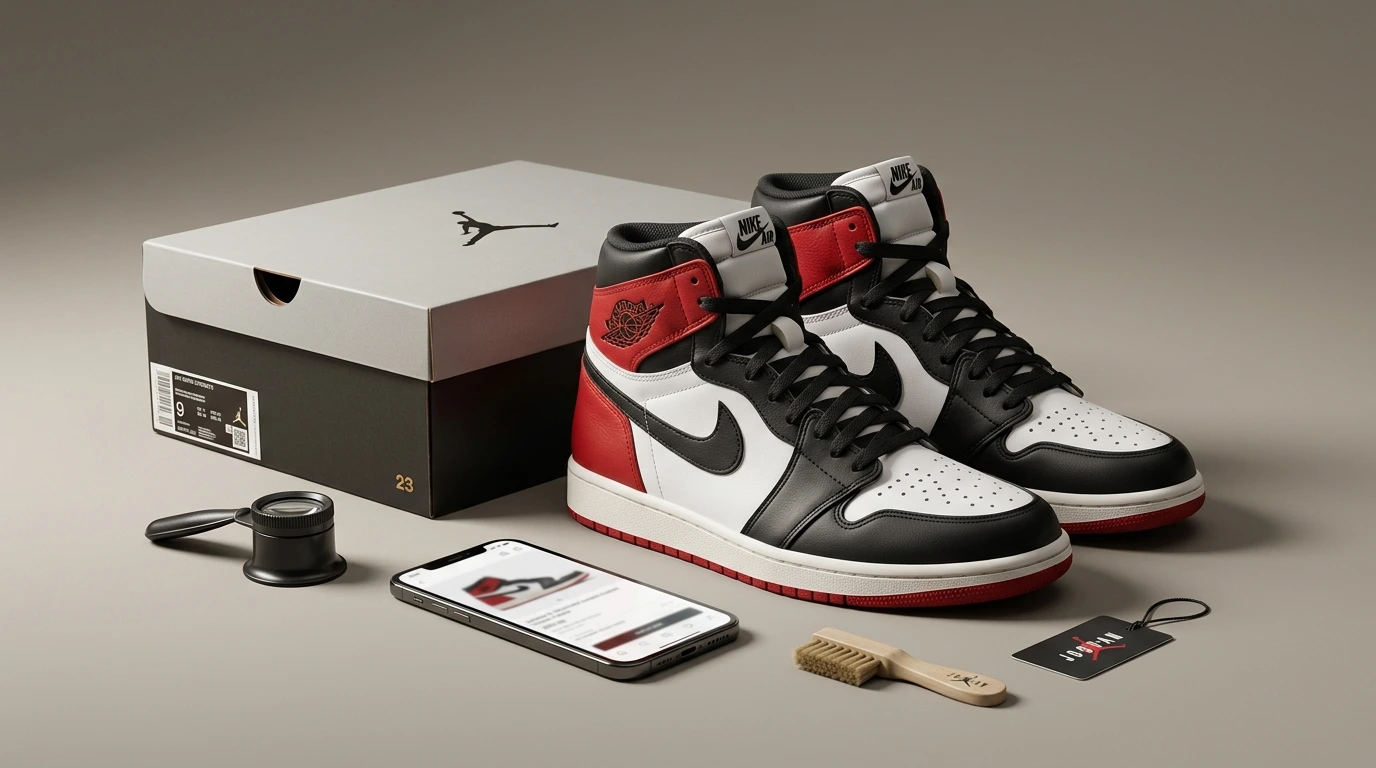
Buying Jordan shoes online is not a process that can be settled by checking one logo or scanning one box label. Counterfeit products can reproduce popular colorways, packaging, product codes and many of the visual details that buyers traditionally use as quick proof of authenticity. At the same time, genuine shoes can have minor factory variations, replacement boxes or signs of wear. That is why a single “real versus fake” checklist is inherently limited.
The most accurate answer to the question “How can you tell if Jordan shoes are fake?” is that authentication requires a combination of evidence. Start with the seller and the price. Then compare the model, colorway, SKU, packaging, shape, materials, stitching and hidden details. For expensive or disputed pairs, use an independent authentication service or a marketplace with a clearly explained verification and buyer-protection process.
It is also important to understand the terminology used in the online sneaker market. An authentic Jordan is an official product made for Nike or Jordan Brand and sold through an official, authorized or legitimate secondary channel. A resale platform does not manufacture the shoe; it is simply another route through which an authentic pair may be sold. A pre-owned Jordan is still authentic, but it has been previously worn or owned. A replica is an unauthorized product designed to resemble a branded shoe. Terms such as “1:1,” “UA,” “OEM” and “factory version” are market descriptions, not official Nike or Jordan authentication grades.
Some shoppers consider a reps jordan because it may offer a similar visual style at a lower price. However, it should be sold and purchased transparently as a replica or unbranded alternative, never presented as an authentic Jordan product. Buyers should also check the laws, marketplace rules and import restrictions that apply where they live. Buyers deserve to know exactly what they are paying for, what quality to expect and what protection they have if the item does not match the description.
1. Start With the Seller Before You Inspect the Shoe
The safest authentication process begins before you place an order. A credible seller does not eliminate every product risk, but a transparent seller gives you information, documentation and a remedy if something goes wrong.
Look for a real business identity, a working customer-service channel, a published shipping policy and a written return or refund policy. The site should explain whether each product is authentic, pre-owned, unbranded, inspired or a replica. If the description avoids this question or uses vague language such as “same factory,” “retail quality” or “identical to original” without explaining product identity, treat that as a warning sign.
The Federal Trade Commission recommends researching sellers and products, checking reviews across multiple sources and searching for the company name together with words such as “complaint” or “scam.” Star ratings alone are not enough because online reviews can be fake, misleading or incentivized.
A reputable store should also provide more than attractive product photos. Check whether the images show the actual pair or are generic catalogue images. For a used pair or a high-value release, you should be able to ask for close-ups of the box label, shoe tags, outsole, heel, tongue, insole and any flaws. A seller that refuses reasonable product questions is asking you to accept unnecessary uncertainty.
Seller checklist
Before paying, check whether the store provides:
- A verifiable business or trading name.
- A working email address and customer-support channel.
- A clear statement about product identity and condition.
- Original or model-specific product photographs.
- Shipping times and tracking information.
- A return window and refund procedure.
- A clear explanation of who pays return shipping.
- A payment method that offers some dispute protection.
- Terms explaining what happens if the product is not as described.
The U.S. Customs and Border Protection agency similarly advises consumers to purchase from reputable retailers, be cautious with third-party vendors, check seller reviews and verify that the seller has a working phone number and address. Those checks are useful for authentic resale sneakers, pre-owned pairs and any lower-priced alternative whose identity and condition must be evaluated. They do not make a replica authentic.
2. Use Price as a Warning Signal, Not as Final Proof
Price is one of the strongest reasons to investigate a Jordan listing, but it is not a standalone authentication test. A lower price can be legitimate when the shoes are used, missing the original box, damaged, from an unpopular size range or part of a genuine clearance sale. A very low price becomes more concerning when the model is rare, the seller has every size available and no credible explanation is provided.
The FTC advises shoppers that expensive brand-name products offered at bargain prices could be counterfeit or stolen. CBP makes a similar point: if a price seems too good to be true, it can create problems for the buyer, legitimate businesses and the wider supply chain.
Compare the total cost rather than the headline price. Include shipping, taxes, payment fees, customs charges and return shipping. A product that appears cheap may not be a bargain if the seller refuses refunds, sends a different item or requires an unprotected payment method.
Authentic, resale and replica price logic
| Buying option | Why the price may be lower or higher | What the buyer should verify | Main trade-off |
| New authentic Jordan from an official channel | Includes brand distribution, retail operations and official product support | Official product page, retailer identity, order record and return terms | Usually the strongest source assurance, but availability may be limited |
| Pre-owned authentic Jordan | Reflects wear, age, missing accessories or box damage | Condition photos, seller history, SKU consistency and authentication | Better value can come with wear and greater inspection responsibility |
| Authenticated resale pair | Includes marketplace verification and platform costs | Verification method, buyer protection and dispute deadline | May cost more than a private sale but can reduce transaction risk |
| Clearly labeled replica or unbranded alternative | The seller is not making a claim of official brand status; the price may be lower, but the reason should be explained accurately | Exact product identity, materials, sizing, photos and refund policy | Lower price may come with different materials, construction, performance and legal restrictions |
| Suspiciously cheap “authentic” pair | No credible explanation for the discount | Seller identity, product evidence, payment protection and return policy | Highest risk of counterfeit, misrepresentation or failed delivery |
At TOP REPS, we clearly state that our products are 1:1 replicas; we never misrepresent them as authentic items, as our reputation is built on quality.
3. Check the Box, Label and SKU Information
The box and labels are useful because they can reveal contradictions. They are not definitive proof because packaging, stickers and product codes can be copied or swapped.
Start with the box label. Compare the model family, color description, size range, product code and general layout with reliable references for the exact release. Look for poor printing, unusual spacing, crooked labels, incorrect fonts, weak cardboard construction and evidence that the box has been re-glued or relabeled.
Then inspect the size tag inside each shoe. Check the style code, size conversions, typography, spacing, manufacturing information and label placement. The product code should be consistent with the model and colorway. If the code belongs to a different colorway, size family or product category, that is a serious warning sign.
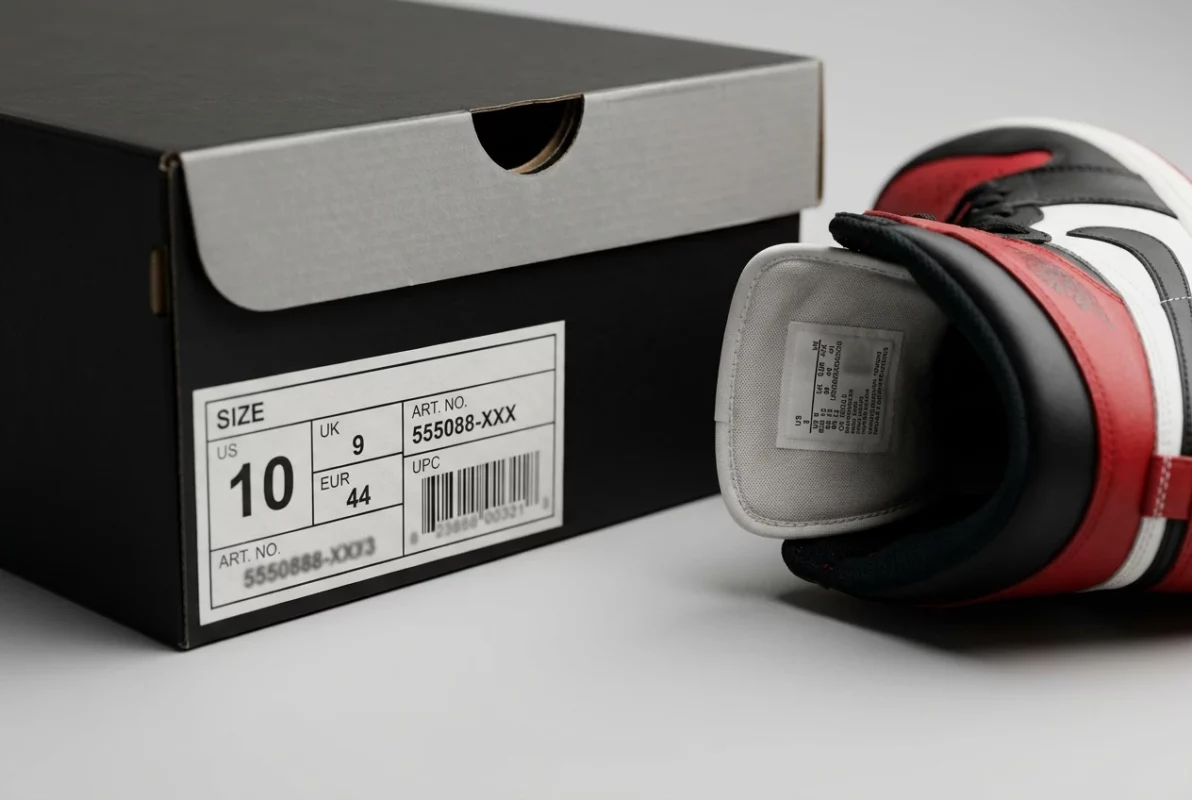
However, a matching product code does not prove authenticity. Counterfeiters can copy a valid code from a genuine release. The correct conclusion is more limited: the code can expose an obvious mismatch, but it cannot certify the physical shoe.
A replacement box also needs careful interpretation. An authentic pair can be sold with a damaged, missing or replacement box. That does not automatically make the shoes fake. The seller should simply disclose the packaging condition accurately and price the item accordingly.
4. Inspect the Shoe’s Shape and Construction
Physical inspection is most useful when you compare the entire pair with an exact reference. Avoid rules such as “one loose thread always means fake” or “real Jordans must smell a certain way.” Genuine mass-produced shoes can contain minor variations, and details can change across retro releases, production runs and regional versions.
Overall silhouette
Place both shoes on a flat surface and compare their proportions. Look at the toe-box height, collar shape, heel structure, panel placement and symmetry. A counterfeit pair may have an unusually bulky toe box, a collapsed heel, an incorrect collar height or visibly different left and right shoes.
The silhouette should be judged against the exact model and colorway. Comparing an Air Jordan 1 with an unrelated online photograph of another release can create false conclusions.
Stitching and panel alignment
Inspect stitch length, thread tension, panel edges, overlays and the relationship between the upper and midsole. Warning signs can include crooked panels, inconsistent stitching, loose threads across multiple areas, excessive glue and construction differences between the two shoes.
Minor factory imperfections are not automatically evidence of a fake. Look for a pattern of inconsistencies rather than one small flaw.
Materials and finishing
Compare the material texture with reliable images or a known pair of the same release. Depending on the model, inspect leather grain, synthetic coating, suede nap, mesh density, tongue padding, lining, insole foam and outsole rubber.
Material feel is helpful but subjective. Lighting, age, storage and wear can change how a material looks and feels. “It feels different” should be treated as a reason to investigate further, not as a final verdict.
Logos and branding
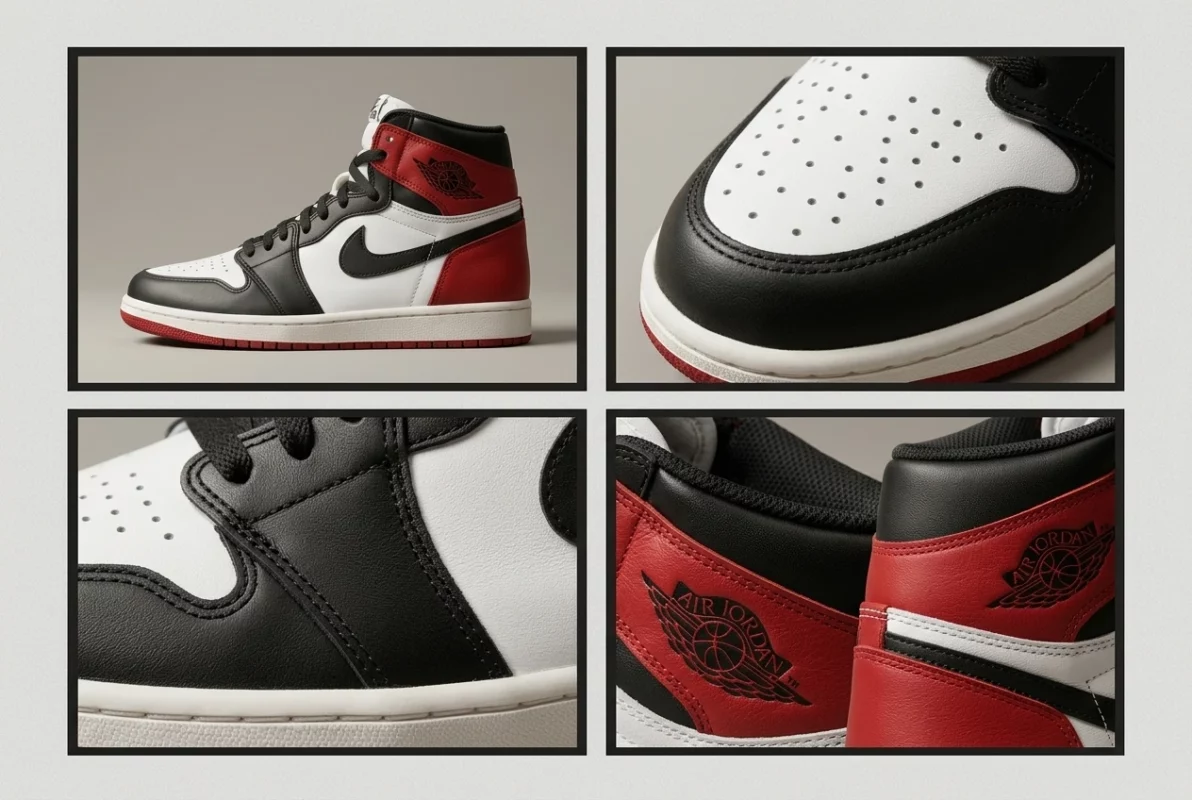
Inspect the Jumpman, Wings logo, Swoosh or other model-specific branding for proportions, placement, embroidery density and print sharpness. These details can expose obvious mistakes, but logos are also among the easiest features for counterfeiters to reproduce. A convincing logo does not prove that the rest of the shoe is genuine.
5. Use Model-Specific Details, Not Generic Fake-Shoe Rules
Jordan authentication is model-specific. A detail that matters on an Air Jordan 4 may be irrelevant to an Air Jordan 11. The release year, colorway and retro version also matter.
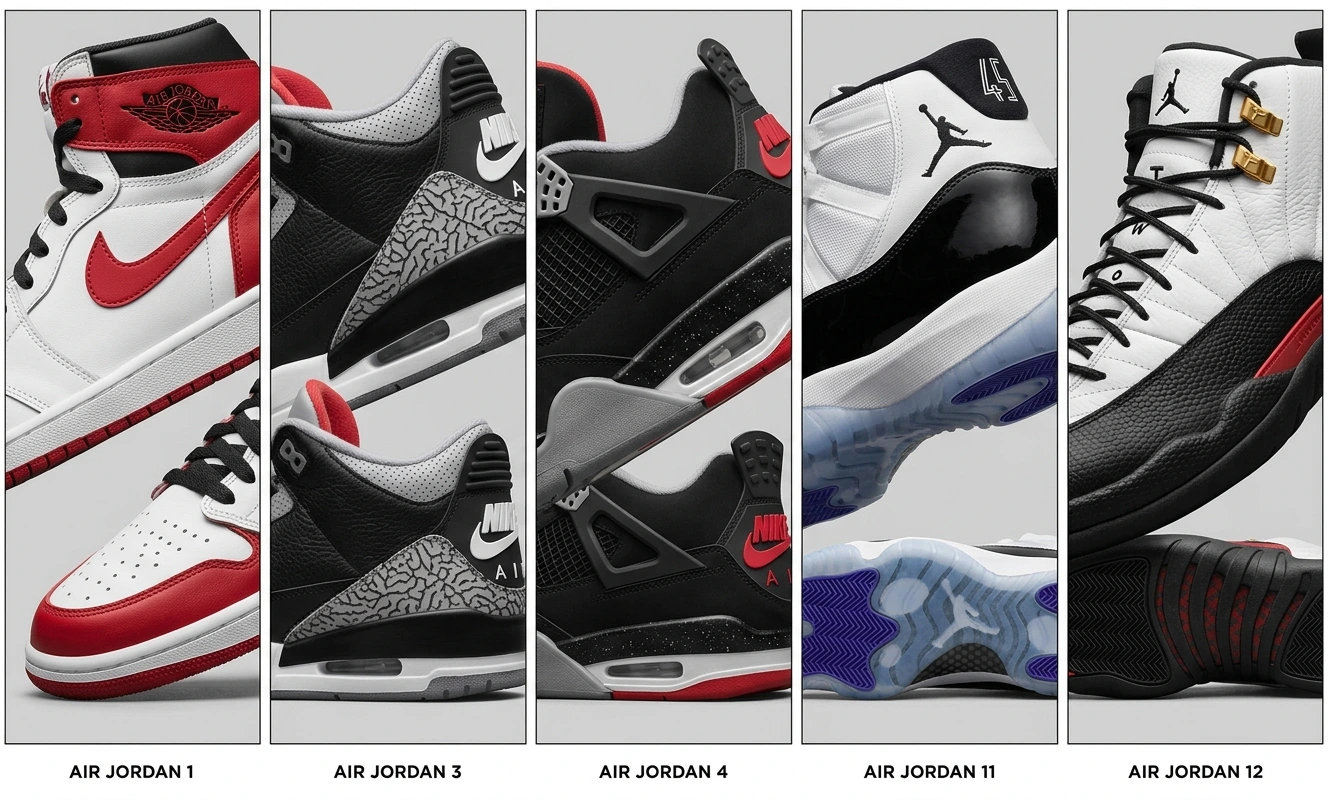
For an Air Jordan 1, buyers commonly examine toe-box perforations, Wings logo placement, Swoosh shape, collar structure, tongue label and outsole pattern. For an Air Jordan 3, useful comparison points can include elephant-print texture, heel tab construction, perforated collar details and midsole shape. For an Air Jordan 4, inspect netting geometry, eyelet wings, heel tab, cage proportions and the relationship between the midsole and outsole.
Air Jordan 11 buyers often examine patent-leather height and curvature, mesh texture, carbon-fiber details, outsole translucency and branding. Air Jordan 12 pairs can be compared through stitching patterns, textured upper material, side-panel shape and outsole segmentation.
These are comparison points, not universal pass-or-fail rules. A responsible inspection guide should not promise that one measurement, one logo angle or one outsole color can authenticate every Jordan release. Nike’s official Jordan page is useful for identifying the brand’s current product architecture and official product listings, but it is not an all-model authentication manual.
6. Inspect the Outsole, Insole, Heel and Interior
Counterfeit products often focus on visible exterior features. Less visible areas can reveal whether the shoe is internally consistent with the reference pair.
Check the outsole tread geometry, logo placement, rubber color, mold sharpness and symmetry. On models with translucent sections, compare the clarity, tint and pattern with reliable examples. Inspect the insole print, removable insole shape, foam density and glue. Look at the heel logo, embroidery or print, and check whether it sits at the expected height and angle.
Inside the shoe, review the tongue label, lining, padding and stitching. Compare both shoes rather than examining only the best-looking one. Photograph the pair under consistent lighting before wearing them so that you have a record of the product’s condition on arrival.
Avoid destructive tests such as cutting the shoe, applying chemicals or burning materials. These tests can damage authentic shoes, create safety hazards and still fail to provide reliable proof.
7. Understand What QR Codes, Apps and Certificates Can Prove
A QR code can connect a product or certificate to an online record, but it is not automatically a brand-issued proof of authenticity. QR codes can be copied, redirected or placed on the wrong product. Always scan through the provider’s official app or website and check whether the result identifies the same model, case number and item.
Third-party authentication services can add useful evidence. For example, Legit App describes a photo-submission process supported by AI and review by multiple authenticators, and it states that the service is independent from the brands it covers. That means its result should be understood as an independent authentication opinion, not as a Nike-issued certificate.
Marketplace verification also varies. GOAT says its products may be verified through digital authentication, in-hand verification and/or machine-learning technology. It also states that some products may be verified through methods that do not include physical examination. This is an important reminder to read the actual verification policy rather than assuming that every platform uses the same process.
| Verification method | What it can help establish | What it cannot guarantee by itself |
| Box and SKU check | Basic model and product-information consistency | That the physical shoes are genuine |
| Detailed physical inspection | Whether construction matches known examples | Perfect certainty without expertise or a reference pair |
| Marketplace verification | An additional platform-level review | That every method involved hands-on examination |
| Independent photo authentication | A documented expert opinion | That the service is affiliated with Nike or Jordan |
| QR code or digital certificate | A link to a record or case result | That the code was not copied or misapplied |
| Official-channel purchase | Strong source-level confidence | Availability of every release or size |
8. Protect the Transaction, Not Only the Product
Even a careful inspection is less useful if the seller provides no meaningful remedy. Before ordering, read the return policy from beginning to end. Confirm how many days you have to return the item, who pays return shipping, whether sale products have different rules, whether restocking fees apply and what evidence is required for a dispute.
The FTC recommends paying by credit card when possible because it can provide a way to dispute charges when merchandise does not arrive, arrives damaged or is not what was ordered. The agency also warns shoppers not to buy from sellers that insist on gift cards, wire transfers, payment apps or cryptocurrency because those methods can make it difficult to recover money.
Keep screenshots of the product page, product identity statement, photos, price, shipping promise and return policy. Save order confirmations, tracking details and all messages with the seller. HTTPS is useful for encrypted communication, but the FTC correctly notes that HTTPS alone does not prove that a website is legitimate.
For higher-value orders, record the parcel condition and unboxing. An unboxing video is helpful documentation, but it is not a substitute for an accurate listing, a protected payment method or a written return policy.
9. Where Do 1:1 Replica Shoes Fit Into the Market?
Some buyers consider 1:1 replica shoes because they want a familiar silhouette, color combination or streetwear aesthetic without paying the price of a rare authentic release. The key consumer-protection requirement is transparency: the product must be identified as a replica or alternative, and the buyer must understand the trade-offs before paying.
The term “1:1” should be treated cautiously. It is not a Nike or Jordan certification, and it does not guarantee identical materials, identical comfort, identical durability or identical performance. Two sellers can use the same term while offering very different products.
A transparent replica-shoe listing should explain:
- that the item is not an official Nike or Jordan product;
- whether it uses any protected logos or branding;
- what materials and construction the seller can document;
- whether the product is intended for casual wear rather than professional sport;
- the actual sizing and fit information;
- what packaging is included;
- expected variations between pairs;
- shipping times, return rules and refund conditions.
The strongest value proposition for a responsible seller is not “you will never know the difference.” It is a clear, accurate buying experience: the customer knows what the item is, what the seller can document about its materials and construction, what quality level to expect and what support is available after the sale. A lower price should not be explained with unsupported claims about a shared factory or identical manufacturing.
Buyers should also consider practical factors beyond appearance. Footwear construction affects comfort, support, durability and fit, but this article does not independently test any particular replica seller or product. A cheaper pair may be suitable for casual use, but it should not automatically be treated as equivalent to an official performance basketball shoe. Buyers who plan to play competitively should prioritize footwear tested and sold for that purpose.
10. Common Myths About Fake Jordan Shoes
Myth 1: A QR code proves the shoes are real
A QR code can be copied or connected to the wrong record. It is supporting evidence only.
Myth 2: One loose thread proves the shoes are fake
Genuine factory-made shoes can have small imperfections. Look for a consistent pattern of construction problems.
Myth 3: A low price always means counterfeit
Used condition, damaged packaging, clearance stock and unpopular sizes can explain legitimate discounts. The risk rises when the discount is extreme and unexplained.
Myth 4: “1:1” means officially certified
It does not. “1:1” is a market term used by replica sellers and buyers, not an official Jordan quality grade.
Myth 5: An authentication app is infallible
Authentication services differ in method, scope and guarantees. Their own descriptions are evidence about their stated process, not independent proof that the process is error-free. Read how the service works, whether the review is physical or image-based and what happens if you dispute the result.
Myth 6: Authentic-looking packaging proves authenticity
Boxes, labels and inserts can be reproduced. The shoe, seller and transaction must all be evaluated.
11. A Practical Ten-Minute Jordan Authentication Checklist
Before payment
- Search the seller’s name together with “review,” “complaint” and “scam.”
- Confirm the seller’s contact information and return policy.
- Compare the total price with several credible listings.
- Confirm the exact model, colorway, size and release information.
- Ask whether the photos show the actual pair.
- Check whether the listing clearly states authentic, pre-owned, unbranded or replica.
- Use a payment method with appropriate dispute protection.
After delivery
- Photograph the parcel and packaging before opening it.
- Compare the box label and both shoe labels.
- Check the product code for model and colorway consistency.
- Inspect both shoes side by side.
- Compare model-specific shape, materials, logos and outsole details.
- Do not wear the shoes if you have a serious authenticity concern.
- Request a return or independent authentication promptly.
- Save the listing, order record, messages and payment evidence.
Final Thought
The best answer to “How can you tell if Jordan shoes are fake?” is not a magic trick. It is a disciplined process that combines seller research, realistic price comparison, SKU and packaging checks, model-specific physical inspection, transaction protection and independent verification when the purchase justifies it.
If you want authentic Jordans, begin with Nike’s official Jordan collection or an established resale platform that explains its verification and buyer-protection policies. Treat the platform’s stated process as a policy promise to review, not as a reason to skip your own checks. If you choose a pre-owned pair, demand accurate condition details and original photos. If you prefer a lower-cost replica or an unbranded alternative for casual wear, choose a seller that labels it honestly, describes the materials accurately and provides a real return process.
A trustworthy online footwear store should make the customer feel informed rather than pressured. It should clearly separate authentic products from replicas or unbranded alternatives and should not use a third-party authentication service’s name as if it were brand authorization. It should never rely on vague promises such as “same factory,” “100% identical” or “you will never know the difference.” The most credible shopping experience is built on clear product identity, realistic expectations, responsive service and a remedy when the order does not match the description.
With 15 years of experience in this industry, we have built a strong reputation and an extensive network of clients and suppliers. If you are looking for affordable jordan sneakers, you might want to consider our "reps" (replica) versions—please take a look at our Jordan collection.
-
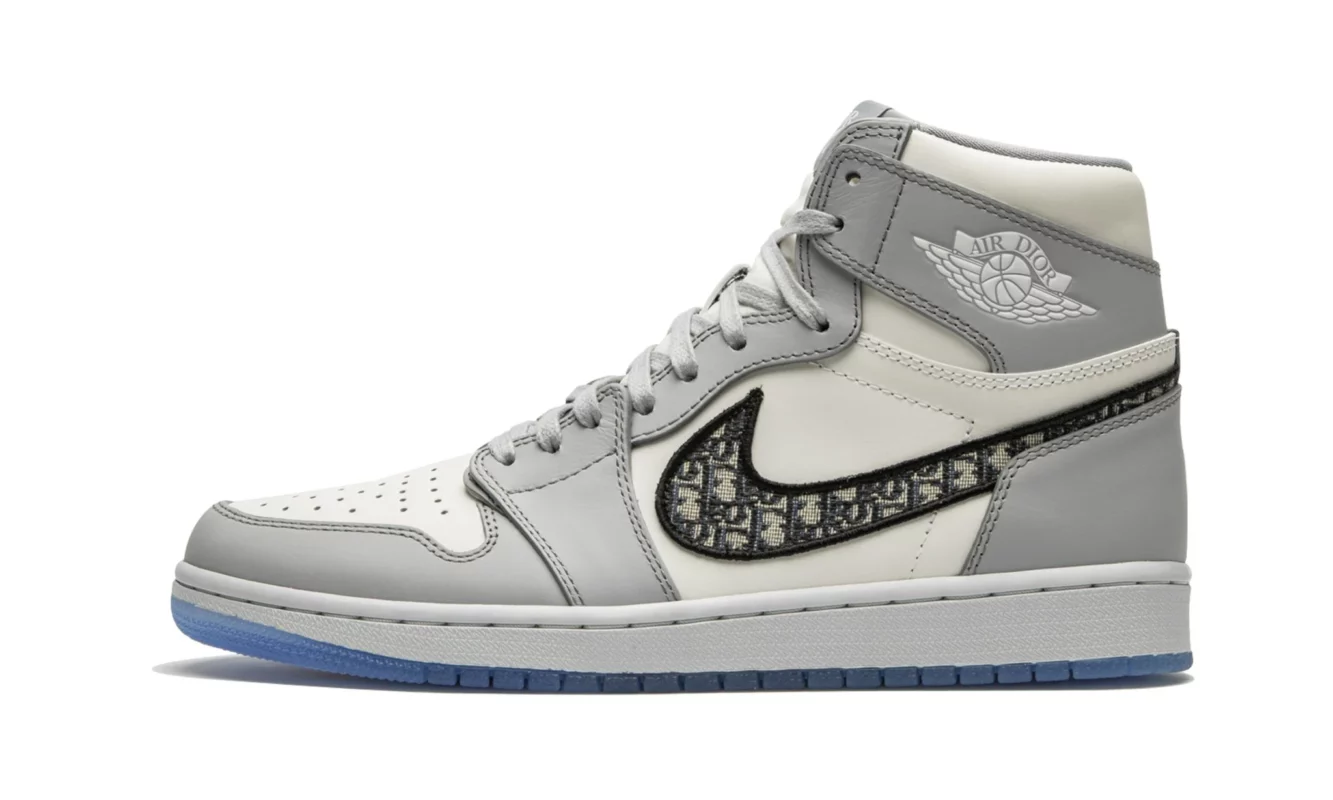
Air Jordan 1 High x Dior
$190.00 -
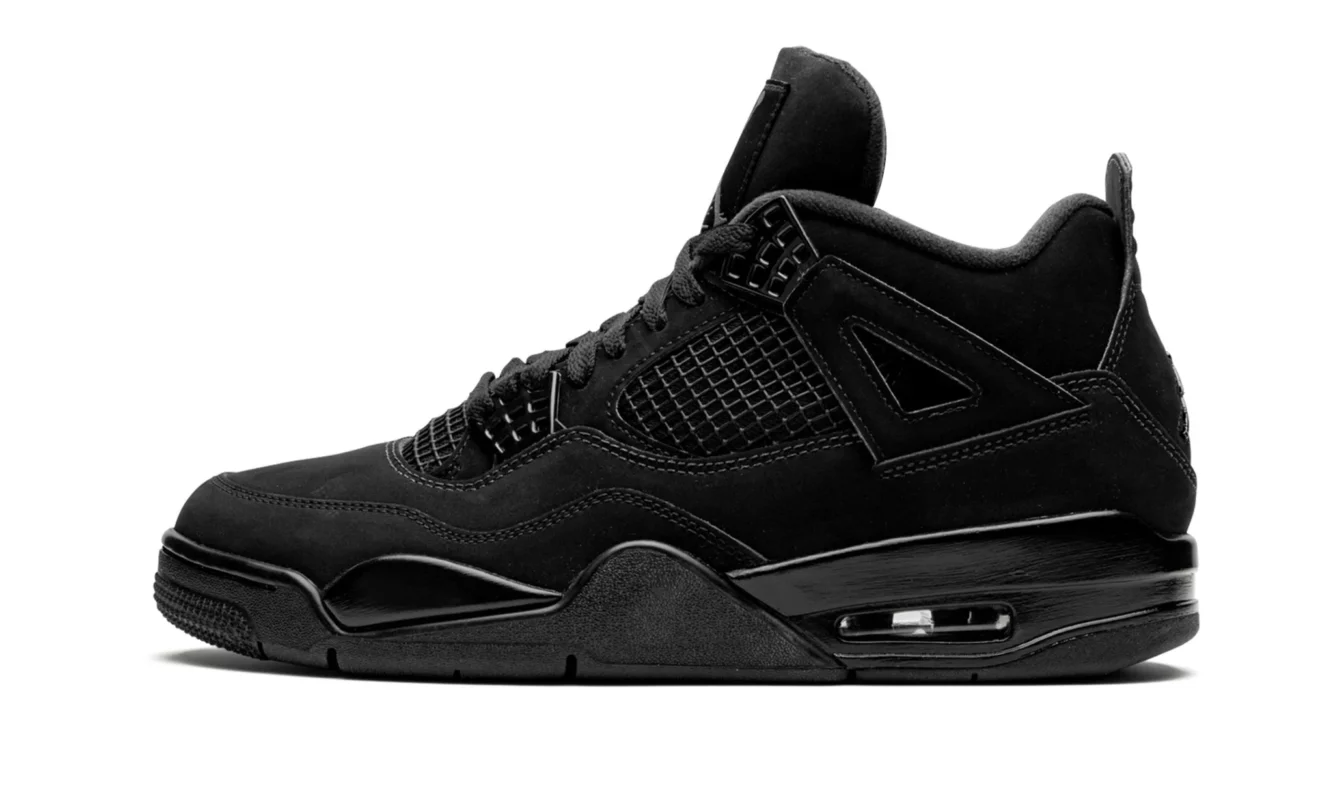
Air Jordan 4 Retro 'Black Cat' 2020
$135.00
Frequently Asked Questions
Can you tell if Jordan shoes are fake from pictures alone?
Pictures can reveal obvious mistakes, but they cannot guarantee authenticity. The result depends on lighting, image quality, the number of angles and the expertise of the reviewer. For a high-value pair, combine photo inspection with seller verification, transaction protection and an independent service.
Does the Nike or Jordan SKU prove authenticity?
No. A correct SKU can show that the label is consistent with a known product, while an incorrect SKU can expose a mismatch. Because counterfeiters can copy valid codes, an SKU is not a certificate of authenticity.
Are “UA,” “OEM,” “factory version” and “1:1” official terms?
No. These are informal market terms. They do not prove that a shoe was made by Nike, Jordan Brand or an authorized factory, and they do not guarantee identical materials or performance.
Are replica Jordan shoes the same as authentic Jordan shoes?
No. A replica is an unauthorized product made to resemble a branded shoe. It may offer a lower price and a similar appearance, but its materials, construction, durability, comfort, performance and legal status may differ. It should be disclosed as a replica rather than marketed as authentic.
Is buying used authentic Jordans safer than buying new shoes from an unknown website?
Not automatically, but a used pair from a seller with strong history, detailed photos, authentication support and a protected return process can be a more transparent purchase than a supposedly new pair from an anonymous store.
What should I do if I already bought suspected fake Jordans?
Stop wearing them, document the listing and product condition, contact the seller in writing and request a remedy under the stated policy. If the seller does not resolve the issue, contact the payment provider or marketplace and consider an independent authentication report. Keep every receipt, message and image.

If you want to view our requirements for reps sneakers and understand the quality check criteria, please click here.